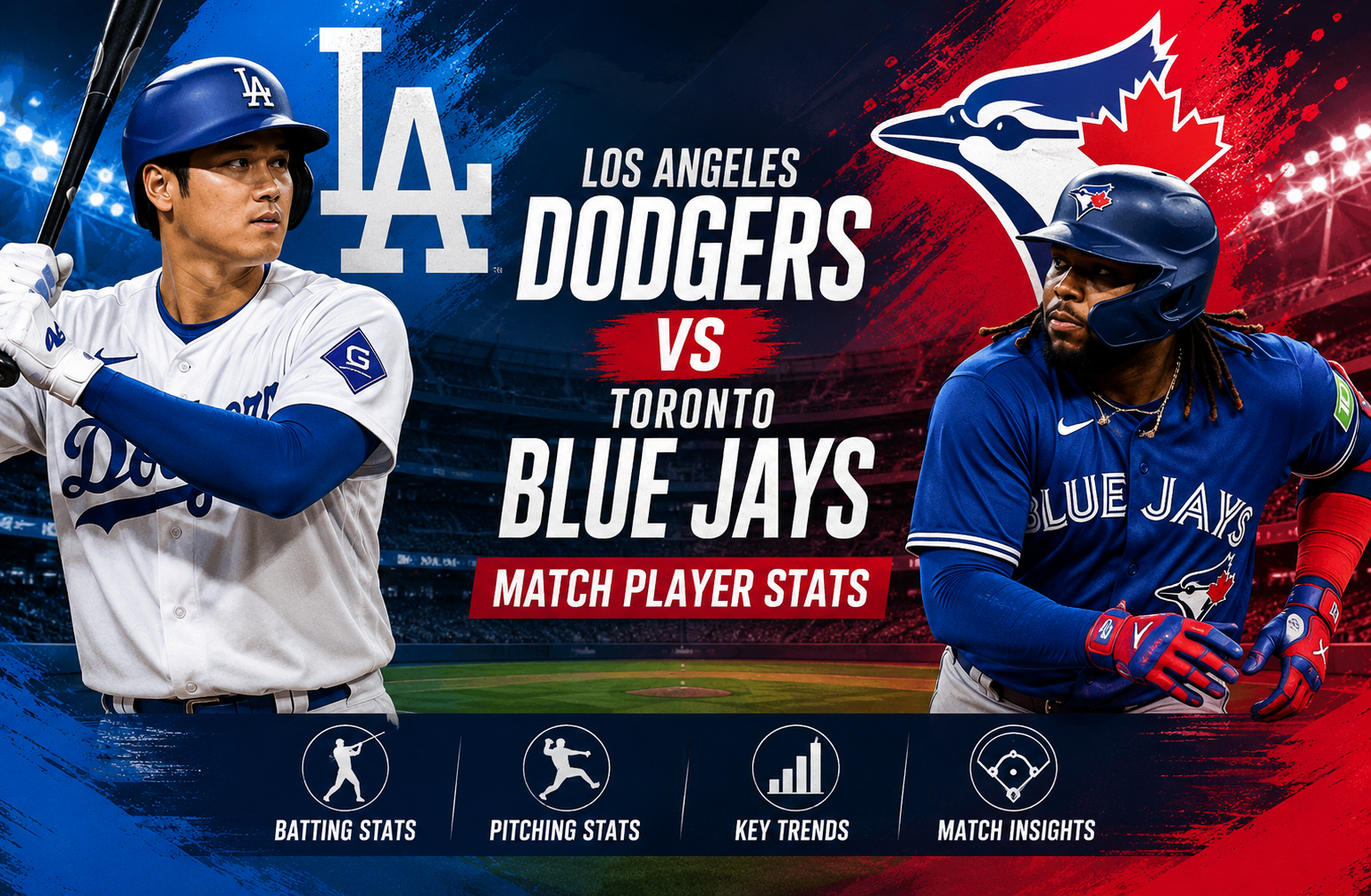
Los Angeles Dodgers vs Toronto Blue Jays Match Player Stats
Baseball fans always pay close attention to Los Angeles Dodgers vs Toronto Blue Jays Match Player Stats because these matchups often feature elite hitters, powerful pitching rotations, and game changing moments that influence the entire MLB season. When two globally recognized franchises meet, player performances become the biggest talking point among analysts, fantasy baseball users, and sports bettors alike.
The matchup between the Los Angeles Dodgers and the Toronto Blue Jays consistently delivers high intensity baseball. From explosive batting displays to bullpen strategy, every inning provides valuable statistical insight. Fans are not only interested in who won the game, but also how individual players performed under pressure.
This detailed guide breaks down the most important player statistics, advanced metrics, tactical observations, and real game insights surrounding this interleague showdown. Whether you are a casual fan, fantasy baseball manager, sports analyst, or someone researching MLB trends, this article provides a complete analysis in a reader friendly format.
Why This Matchup Attracts So Much Attention
The Dodgers and Blue Jays represent two aggressive front offices that prioritize star talent, analytics, and postseason ambitions. Their games often become national headlines because both rosters feature MVP caliber players and experienced pitching staffs.
Several factors make this matchup especially important:
- Strong offensive lineups on both sides
- Multiple All Star caliber players
- High scoring potential
- Strategic bullpen management
- Fantasy baseball relevance
- Playoff atmosphere intensity
The Dodgers traditionally rely on lineup depth and disciplined pitching execution, while Toronto combines athleticism with power hitting and aggressive base running.
Because of these contrasting styles, the statistical battle becomes even more fascinating.
Los Angeles Dodgers Offensive Player Stats Breakdown
The Dodgers lineup is built around patience, slugging percentage, and situational hitting. Their offensive numbers usually rank among MLB leaders in:
- On base percentage
- OPS
- Home runs
- Runs scored
- Walk rate
Several players typically drive these numbers.
Mookie Betts Performance Analysis
Mookie Betts remains one of the most complete players in baseball. Against Toronto pitching, his plate discipline often becomes the deciding factor.
Key strengths include:
- Elite contact rate
- Fastball recognition
- Base running intelligence
- Defensive versatility
In many Dodgers vs Blue Jays games, Betts creates scoring opportunities even when he is not hitting home runs. His ability to work deep counts pressures opposing pitchers early.
Typical statistical impact includes:
| Category | Performance Trend |
| Batting Average | Consistently high |
| On Base Percentage | Elite |
| Runs Scored | Strong contributor |
| Stolen Bases | Situational impact |
His advanced metrics also highlight hard hit percentage and expected batting average consistency.
Freddie Freeman and Situational Hitting
Freddie Freeman’s value goes beyond traditional box score numbers. He excels in high leverage situations and frequently produces clutch RBIs against quality pitching.
What makes Freeman dangerous:
- Opposite field hitting
- Low strikeout percentage
- Elite swing decisions
- Consistency with runners in scoring position
Against Toronto’s right handed pitching, Freeman often targets gaps instead of forcing pull side power. That approach helps him maintain offensive consistency throughout a series.
Shohei Ohtani Offensive Influence
Shohei Ohtani changes the entire dynamic of the Dodgers lineup. His presence forces pitchers to alter sequencing strategies, especially in late innings.
Important offensive contributions include:
- Home run production
- Exit velocity dominance
- Extra base hits
- Pressure on mistake pitches
Pitchers rarely get comfortable against Ohtani because he punishes even small command errors. His slugging numbers frequently influence total run production in interleague games.
Toronto Blue Jays Offensive Player Stats Breakdown
Toronto’s offensive philosophy differs slightly from Los Angeles. The Blue Jays often emphasize aggressive attacking early in counts while using athleticism to generate offensive momentum.
Vladimir Guerrero Jr. Power Numbers
Vladimir Guerrero Jr. remains one of the most dangerous hitters in baseball when facing elite competition. His matchup against Dodgers pitching always draws major attention.
His offensive strengths include:
- High exit velocity
- Strong plate coverage
- Ability to drive pitches to all fields
- RBI production
One important trend in these matchups is Guerrero’s performance against breaking balls. When he stays disciplined, his offensive numbers improve dramatically.
Key metrics analysts monitor:
| Stat Category | Importance |
| OPS | Measures total offensive impact |
| Hard Hit Rate | Indicates quality contact |
| RBI Opportunities | Shows clutch productivity |
| Barrel Percentage | Predicts power success |
Bo Bichette Contact and Momentum
Bo Bichette provides balance to Toronto’s lineup because of his contact ability and offensive consistency.
His role includes:
- Extending innings
- Generating doubles
- Applying pressure through aggressive hitting
- Producing multi hit games
Against Dodgers starters, Bichette often attacks early count fastballs. This strategy occasionally produces quick offensive momentum before pitchers settle into rhythm.
George Springer Veteran Leadership
George Springer’s postseason experience adds composure during difficult innings. Even when not producing massive statistical totals, his leadership and situational awareness matter significantly.
Areas where Springer impacts games:
- Leadoff production
- Defensive range
- Pitch recognition
- Run creation
Experienced players like Springer frequently become difference makers during tight interleague contests.
Pitching Matchup Analysis
Pitching usually determines the outcome of Dodgers versus Blue Jays games because both lineups can score rapidly.
Los Angeles Dodgers Starting Rotation
The Dodgers traditionally prioritize:
- Strike throwing efficiency
- Velocity variation
- Bullpen flexibility
- Matchup analytics
Yoshinobu Yamamoto Statistical Strengths
Yamamoto’s command and pitch sequencing make him particularly effective against aggressive hitters.
His strongest metrics include:
- Strikeout to walk ratio
- Ground ball percentage
- First pitch strike rate
- WHIP control
Against Toronto hitters, his splitter becomes especially valuable because it disrupts timing patterns.
Tyler Glasnow Velocity Impact
Tyler Glasnow’s fastball velocity can dominate lineups when command remains consistent.
Key performance indicators:
| Pitching Metric | Importance |
| Strikeout Rate | Measures dominance |
| Walk Percentage | Indicates command |
| Swing and Miss Rate | Tracks deception |
| ERA | Overall effectiveness |
Glasnow’s challenge against Toronto is maintaining efficiency. The Blue Jays lineup often forces deep counts and elevates pitch totals.
Toronto Blue Jays Pitching Overview
Toronto’s pitching strategy focuses heavily on limiting slugging opportunities.
Kevin Gausman Split Finger Effectiveness
Kevin Gausman’s splitter remains one of baseball’s most respected pitches.
Why it matters against the Dodgers:
- Generates weak contact
- Creates strikeout opportunities
- Neutralizes left handed hitters
- Disrupts timing
His success often depends on fastball command early in counts.
José Berríos Consistency Analysis
José Berríos has shown improved command in recent seasons, especially with pitch location efficiency.
Critical areas of performance:
- Curveball accuracy
- Limiting home runs
- Managing runners
- Inning durability
Against elite Dodgers hitters, pitch sequencing becomes essential because predictable patterns are punished quickly.
Bullpen Comparison and Late Inning Stats
Modern MLB games are frequently decided after the sixth inning, making bullpen statistics extremely important.
Dodgers Bullpen Strengths
Los Angeles typically performs well in:
- Save percentage
- Strikeout efficiency
- Matchup specialization
- Limiting inherited runners
The Dodgers front office aggressively uses analytics to determine ideal reliever matchups.
Blue Jays Bullpen Strategy
Toronto often relies on:
- Power relievers
- High velocity fastballs
- Late inning matchup advantages
- Ground ball specialists
Bullpen management becomes especially critical in close scoring games.
Defensive Metrics That Influence Outcomes
Defense often gets ignored when discussing Los Angeles Dodgers vs Toronto Blue Jays Match Player Stats, but advanced fielding data frequently determines game changing moments.
Important defensive metrics include:
- Defensive Runs Saved
- Outs Above Average
- Catcher framing
- Double play efficiency
Dodgers Defensive Edge
The Dodgers usually demonstrate:
- Strong infield positioning
- Reliable outfield range
- Efficient defensive communication
Toronto Defensive Strengths
Toronto’s athleticism helps in:
- Turning double plays
- Tracking deep fly balls
- Controlling base runners
Defensive consistency becomes crucial during postseason style games.
Advanced Analytics Behind the Matchup
Modern baseball analysis goes beyond batting average and ERA.
Analysts now prioritize:
- xBA
- xSLG
- Barrel percentage
- Chase rate
- Spin rate
- Launch angle
According to MLB Statcast Data, hard hit percentage and expected slugging often provide more predictive insight than traditional stats alone.
Why Advanced Metrics Matter
For example:
- A hitter with a low batting average but high hard contact may still be performing well
- A pitcher with strong strikeout numbers but poor command may struggle late in games
- Defensive positioning can significantly reduce expected offensive output
These metrics help explain why some performances look better or worse than standard box scores suggest.
Key Head to Head Statistical Trends
Several recurring trends appear when analyzing recent meetings between these franchises.
Offensive Trends
Common offensive patterns include:
- Early inning scoring
- Strong extra base hit totals
- Home run influence
- High leverage RBI opportunities
Pitching Trends
Pitchers who succeed usually:
- Limit walks
- Avoid center plate mistakes
- Control pitch counts
- Force ground balls
Momentum Swings
Momentum shifts frequently occur because both teams possess explosive offensive capability. One inning can completely change the game narrative.
Fantasy Baseball Perspective
Fantasy baseball players closely monitor Los Angeles Dodgers vs Toronto Blue Jays Match Player Stats because these matchups often generate elite offensive production.
Best Fantasy Targets
Popular fantasy selections typically include:
- Power hitters
- Leadoff batters
- Strikeout pitchers
- High OPS players
Risk Factors
Fantasy managers should also consider:
- Ballpark conditions
- Bullpen fatigue
- Platoon matchups
- Injury reports
Daily fantasy contests especially benefit from advanced matchup analysis.
Tactical Decisions That Shape the Game
Managers play a huge role in these contests.
Key managerial decisions include:
- Bullpen timing
- Defensive shifts
- Pinch hitting strategy
- Pitch sequencing
- Base stealing attempts
The smallest strategic adjustment can influence the entire statistical outcome.
Impact of Ballpark Conditions
Ballpark environment strongly affects offensive numbers.
Dodger Stadium Factors
Dodger Stadium can influence:
- Night game pitching efficiency
- Fly ball carry
- Pitch movement
Rogers Centre Factors
The Rogers Centre often benefits hitters because of:
- Indoor conditions
- Fast playing surface
- Consistent temperature
Understanding venue impact helps explain statistical differences across series.
Most Important Statistical Categories to Watch
When evaluating this matchup, several stats provide the clearest insight.
Offensive Categories
- OPS
- Slugging percentage
- RBI efficiency
- Walk rate
Pitching Categories
- WHIP
- Strikeout percentage
- First pitch strike rate
- Ground ball rate
Defensive Categories
- Errors
- Defensive Runs Saved
- Catcher framing
Focusing on these categories creates a more accurate understanding of team performance.
Real Game Situations That Define Matchups
Statistics become more meaningful when connected to actual game situations.
Examples include:
- Bases loaded pressure
- Two out hitting
- Late inning bullpen usage
- Extra innings performance
Elite players separate themselves during these moments.
How Injuries Can Change Statistical Expectations
Injuries dramatically affect lineup depth and matchup projections.
Important injury related impacts include:
- Reduced offensive protection
- Bullpen overuse
- Defensive instability
- Altered batting order structure
Even one missing star player can completely change projected offensive production.
Media and Fan Reactions to Player Performances
Baseball discussions now extend far beyond television broadcasts.
Fans analyze:
- Exit velocity clips
- Pitch movement graphics
- Strike zone charts
- Advanced analytics reports
Social media has transformed how fans interpret player statistics in real time.
Comparing Star Power Between Both Teams
This matchup often feels like an All Star showcase because of the elite talent involved.
Dodgers Advantages
- Lineup depth
- Power production
- Rotation upside
Blue Jays Advantages
- Athletic core
- Aggressive offense
- Young talent energy
The balance between experience and athleticism makes these games unpredictable.
What Makes This Matchup Valuable for Analysts
Baseball analysts study these games because they provide:
- High quality competition
- Strategic complexity
- Advanced statistical insight
- Postseason style pressure
Many MLB trends become visible during elite interleague matchups like this one.
Common Mistakes Fans Make When Reading Player Stats
Many casual fans focus only on:
- Batting average
- Home runs
- Wins and losses
However, deeper analysis requires understanding context.
For example:
- A pitcher can perform well despite allowing runs because of defensive errors
- A hitter may contribute heavily without recording multiple RBIs
- Ballpark factors can distort offensive numbers
Context always matters.
FAQs
What are the most important stats in Dodgers vs Blue Jays games?
OPS, strikeout rate, WHIP, RBI efficiency, and hard hit percentage are among the most valuable statistics for evaluating player impact.
Which players usually dominate this matchup?
Players like Shohei Ohtani, Freddie Freeman, and Vladimir Guerrero Jr. often attract the most attention because of their offensive consistency and power production.
Why do advanced analytics matter in baseball?
Advanced metrics provide deeper insight into player performance by measuring contact quality, pitch effectiveness, and defensive impact beyond traditional statistics.
How does ballpark location affect player stats?
Different stadium environments influence home run distance, pitching movement, and offensive scoring patterns.
Are bullpen stats important in this matchup?
Yes. Late inning relievers frequently decide close games between strong offensive teams.
Why is this interleague matchup popular among fantasy baseball players?
These games often feature elite hitters and strikeout pitchers, creating strong fantasy scoring opportunities.
Conclusion
The analysis of Los Angeles Dodgers vs Toronto Blue Jays Match Player Stats reveals far more than simple box score numbers. This matchup showcases elite offensive talent, strategic pitching battles, advanced analytics, and high pressure decision making that reflects the modern evolution of Major League Baseball.
From the disciplined offensive structure of the Dodgers to the aggressive athletic identity of the Blue Jays, every inning provides meaningful statistical insight. Star players influence momentum, pitchers battle for command efficiency, and managers rely heavily on analytics to gain competitive advantages.
For baseball fans, fantasy managers, analysts, and sports enthusiasts, studying these player stats offers a deeper understanding of how elite MLB teams operate under pressure. The combination of talent, strategy, and statistical depth ensures that this matchup remains one of the most fascinating interleague contests in baseball.