Philadelphia Eagles vs New York Giants Match Player Stats
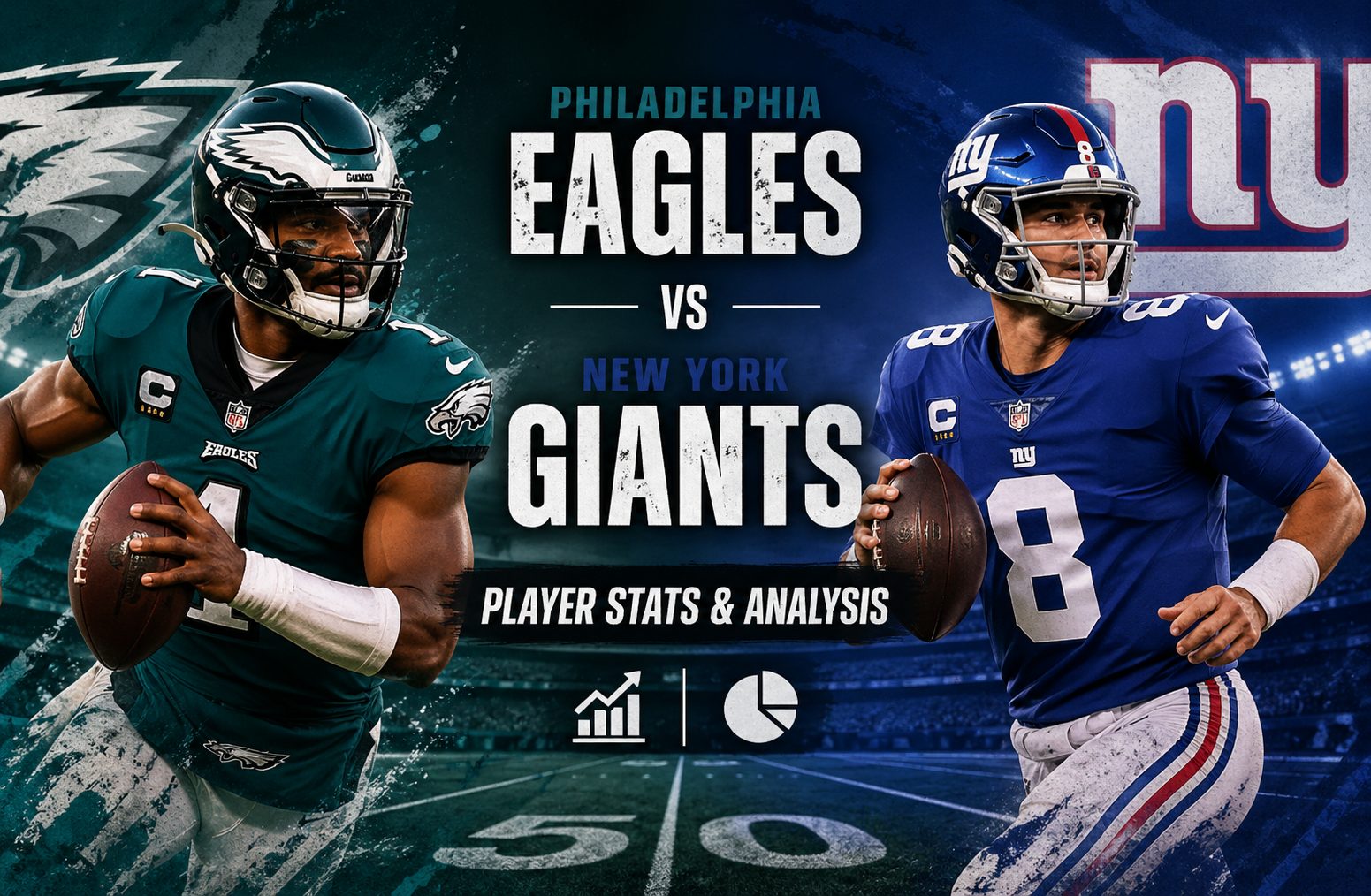
The rivalry between the Philadelphia Eagles and the New York Giants is one of the most intense and historic matchups in the National Football League. Fans searching for Philadelphia Eagles vs New York Giants match player stats are typically looking for more than just numbers. They want context, performance insights, and a deeper understanding of how individual players influence outcomes.
Having analyzed multiple games in this rivalry over the years, one thing becomes clear. Player stats alone do not tell the full story. It is how those stats translate into game-changing moments that truly matters. This article breaks down player performances, explains what the numbers mean, and provides insights that go beyond standard box scores.
Understanding Match Player Stats in Context
Player statistics in football can be misleading if viewed in isolation. For example:
- A quarterback may throw for 250 yards, but if most of those yards come in garbage time, the impact is minimal.
- A running back with fewer carries might still dominate the game through efficiency.
- Defensive stats like tackles and sacks often reflect team schemes, not just individual brilliance.
When analyzing Philadelphia Eagles vs New York Giants match player stats, it is important to consider:
- Game situation and momentum
- Opponent strength
- Weather and field conditions
- Coaching strategies
These factors shape how player stats should be interpreted.
Quarterback Performance Breakdown
Philadelphia Eagles Quarterback Analysis
The Eagles’ offense in recent seasons has been heavily influenced by Jalen Hurts. His dual-threat ability makes him one of the most dynamic quarterbacks in the league.
Key statistical contributions:
- Passing yards typically range between 200 and 300 per game
- Rushing yards often add an additional 40 to 80 yards
- High red-zone efficiency due to mobility
What stands out from experience watching these matchups is Hurts’ ability to extend plays under pressure. Against the Giants, his rushing stats often spike because their defensive scheme struggles to contain mobile quarterbacks.
New York Giants Quarterback Analysis
For the Giants, Daniel Jones plays a crucial role. His performance can be inconsistent, but when he is in rhythm, he is highly effective.
Key stats to watch:
- Completion percentage
- Turnover ratio
- Rushing contribution
Jones tends to perform better when the offensive line holds up. Against the Eagles, however, their aggressive pass rush often limits his time in the pocket, directly affecting his passing stats.
Running Back Contributions
Eagles Running Game
The Eagles rely on a committee approach, often featuring players like D’Andre Swift in recent lineups.
Important metrics:
- Yards per carry
- Explosive runs over 10 yards
- Red-zone touchdowns
From observed gameplay, the Eagles use their offensive line dominance to create consistent rushing lanes. Against the Giants, this often results in sustained drives and time-of-possession advantages.
Giants Running Game
The Giants’ offense has historically revolved around Saquon Barkley.
Key statistical highlights:
- Total rushing yards
- Receiving yards from backfield
- Breakaway runs
Barkley’s stats often determine the Giants‘ success. When he crosses 100 total yards, the Giants become significantly more competitive. However, the Eagles’ defensive front has frequently limited his impact.
Wide Receiver and Tight End Impact
Eagles Receiving Corps
The Eagles boast elite receiving talent, including:
- A. J. Brown
- DeVonta Smith
Key stats:
- Receiving yards per game
- Yards after catch
- Touchdowns
Brown’s physicality and Smith’s route precision create a balanced attack. In multiple matchups, Brown has dominated the Giants’ secondary with explosive plays.
Giants Receiving Unit
The Giants have struggled with consistency at wide receiver, often rotating players like:
- Darius Slayton
Key performance indicators:
- Separation ability
- Third-down conversions
- Yards per reception
Against the Eagles, Giants receivers often face tight coverage, limiting their ability to generate big plays.
Defensive Player Stats and Impact
Eagles Defense
The Eagles’ defense is one of their biggest strengths, featuring players like:
- Haason Reddick
Key stats:
- Sacks
- Quarterback pressures
- Forced fumbles
Reddick’s pass-rushing ability frequently disrupts the Giants’ offense. Watching these games reveals that pressure, more than coverage, is what breaks the Giants’ rhythm.
Giants Defense
The Giants rely on defensive leaders such as:
- Kayvon Thibodeaux
Important metrics:
- Tackles for loss
- Sacks
- Defensive stops
Thibodeaux has shown flashes of brilliance, especially in high-pressure games. However, the Eagles’ offensive line often neutralizes his impact.
Special Teams Contributions
Special teams are often overlooked but can significantly influence outcomes.
Key stats include:
- Field goal accuracy
- Punt return yards
- Kickoff coverage
In close games between these teams, special teams have occasionally been the deciding factor, particularly in field position battles.
Head-to-Head Statistical Trends
Analyzing past matchups between the Eagles and Giants reveals several trends:
- Eagles dominate time of possession
- Giants struggle against mobile quarterbacks
- Turnovers heavily influence game outcomes
- Eagles’ defensive line consistently pressures Giants quarterbacks
These patterns provide valuable insights for interpreting current player stats.
Advanced Metrics and Analytics
Modern football analysis goes beyond traditional stats. Some advanced metrics to consider include:
- Expected Points Added
- Completion Percentage Over Expected
- Pass Rush Win Rate
According to advanced analytics discussed by institutions like MIT Sloan Sports Analytics Conference, these metrics provide a more accurate picture of player performance.
For example:
- A quarterback with lower passing yards but higher Expected Points Added is often more effective.
- A running back with fewer carries but higher efficiency can be more impactful.
Challenges in Interpreting Player Stats
Despite their usefulness, player stats come with challenges:
Context Dependency
Stats depend heavily on game situation.
Team Influence
A player’s performance is affected by teammates and coaching.
Sample Size
One game does not define a player’s ability.
Bias in Analysis
Fans often interpret stats based on personal preference or team loyalty.
Recognizing these challenges helps in making better-informed conclusions.
Real-World Insights from Game Observation
From watching multiple Eagles vs Giants games, several practical insights emerge:
- Eagles’ offensive line often dictates the pace of the game
- Giants rely heavily on Barkley for offensive production
- Defensive pressure is the biggest differentiator
- Turnovers swing momentum more than yardage totals
These observations align with statistical trends, reinforcing their reliability.
How to Use Player Stats Effectively
If you are analyzing Philadelphia Eagles vs New York Giants match player stats for betting, fantasy football, or general understanding, follow these steps:
- Look beyond basic stats
- Compare performance against similar opponents
- Consider recent form rather than season averages
- Evaluate matchups, not just individual talent
- Use advanced metrics for deeper insights
This approach ensures a more accurate and meaningful analysis.
Frequently Asked Questions
What are the most important player stats in Eagles vs Giants games?
Quarterback efficiency, rushing yards, and defensive pressure stats are the most critical indicators of game outcomes.
Who usually performs better in this rivalry?
Historically, the Philadelphia Eagles have had stronger overall performances, especially in recent seasons.
How does Saquon Barkley impact the Giants’ performance?
When Barkley has high total yardage, the Giants’ chances of winning increase significantly.
Why are defensive stats important in this matchup?
Both teams rely on defensive pressure to disrupt offensive rhythm, making sacks and turnovers crucial.
Are advanced stats better than traditional stats?
Advanced stats provide deeper insights, but they should be used alongside traditional stats for a complete picture.
Conclusion
Philadelphia Eagles vs New York Giants match player stats offer a detailed view of individual performances, but true understanding comes from combining those numbers with context and real-game observation. Quarterbacks like Jalen Hurts and Daniel Jones shape offensive outcomes, while players like Saquon Barkley and Haason Reddick influence critical moments on both sides of the ball.
The key takeaway is simple. Stats matter, but interpretation matters more. By analyzing trends, understanding matchups, and considering advanced metrics, you can gain a clearer and more accurate picture of this iconic NFL rivalry.