Cincinnati Reds vs Miami Marlins Match Player Stats
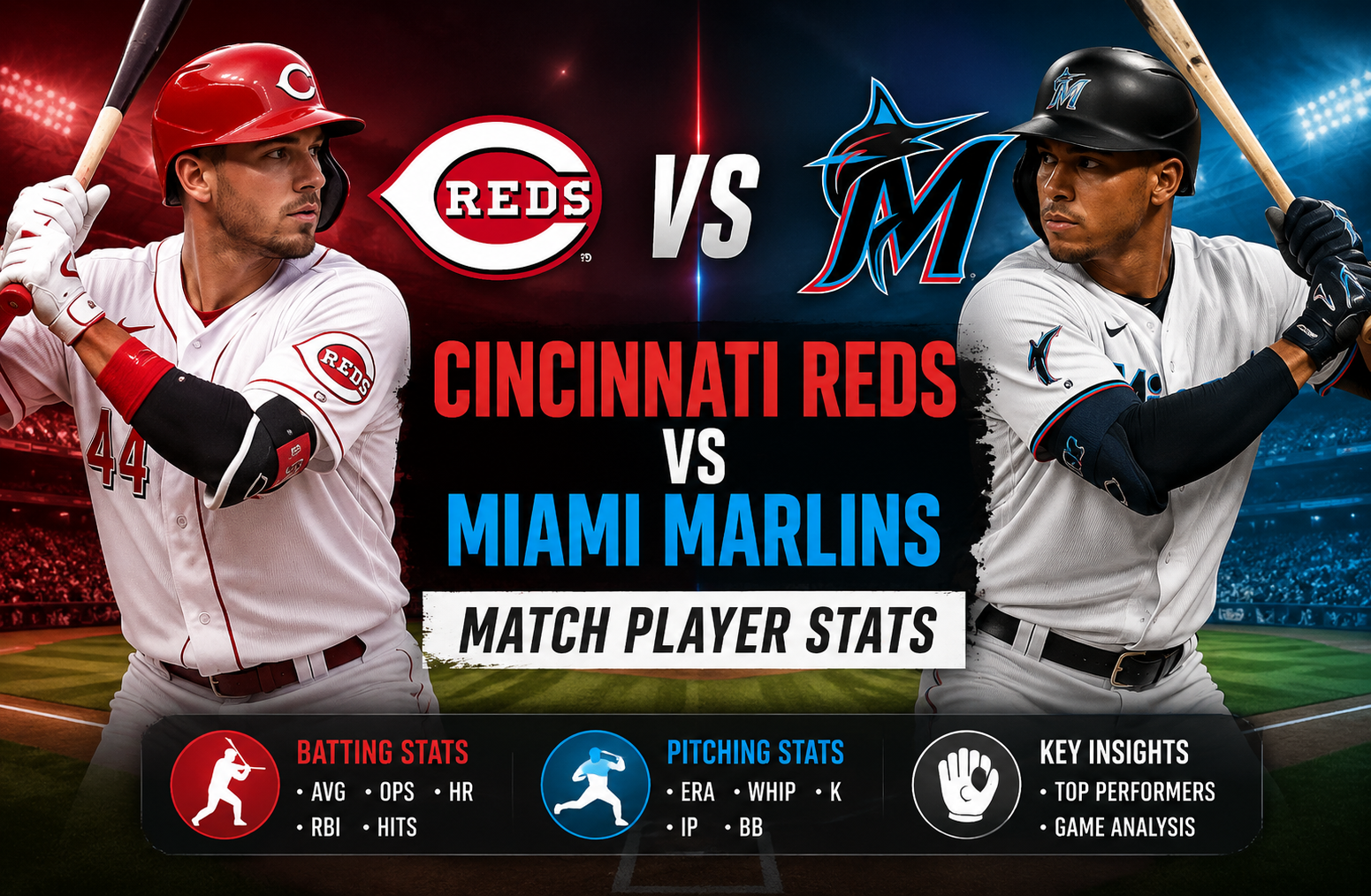
Baseball fans searching for Cincinnati Reds vs Miami Marlins match player stats usually want more than a simple box score. They want to understand who influenced the game, which players shifted momentum, how pitchers controlled the innings, and what the performances mean going forward. This matchup regularly delivers interesting tactical battles because both teams rely heavily on developing young talent, aggressive baserunning, and situational hitting.
The latest Cincinnati Reds vs Miami Marlins match player stats also reveal deeper trends about roster construction, bullpen reliability, offensive consistency, and player development. When you study the numbers carefully, you begin to see why certain innings changed the game and how individual performances shaped the final result.
Understanding the Importance of Match Player Statistics
Player statistics in baseball are not just numbers on a scoreboard. They help explain:
- Offensive efficiency
- Pitching dominance
- Defensive reliability
- Situational decision-making
- Momentum shifts during critical innings
For matchups like the Reds and Marlins, player stats become even more valuable because both clubs often depend on emerging players rather than superstar-heavy rosters. Every hit, strikeout, stolen base, and bullpen appearance matters.
Modern baseball analysis now combines traditional stats with advanced metrics. Fans no longer look only at batting average or ERA. They also evaluate:
- OPS
- WHIP
- Exit velocity
- Strikeout percentage
- On-base efficiency
- Barrel rate
- Defensive runs saved
These advanced numbers give a more complete understanding of player impact during a game.
Cincinnati Reds vs Miami Marlins Match Player Stats Breakdown
Offensive Leaders From Cincinnati
The Reds offense often thrives when its younger core plays aggressively on the bases and attacks early-count pitches. Several hitters consistently stand out during games against Miami.
Key Batting Performances
Leadoff Production
The Reds gain major momentum when their leadoff hitters reach base early. In many recent meetings against Miami, Cincinnati created pressure through:
- Walks
- Singles to opposite field
- Aggressive steals
- Hit-and-run situations
That approach forces Miami pitchers into uncomfortable counts and creates scoring opportunities before the middle innings.
Power Hitting Impact
Cincinnati’s power numbers against Miami have improved significantly in recent seasons. Extra-base hits often determine the outcome of these matchups.
Important offensive categories include:
| Stat Category | Reds Impact |
| Doubles | Creates scoring pressure |
| Home Runs | Changes inning momentum instantly |
| Slugging Percentage | Measures overall power efficiency |
| RBIs | Shows clutch production |
The Reds lineup becomes dangerous when multiple hitters contribute rather than relying on one slugger.
Miami Marlins Offensive Contributions
Miami traditionally focuses on contact hitting, speed, and disciplined at-bats. Against Cincinnati pitching, the Marlins often try to extend innings through patience and situational baseball.
Contact Hitting Efficiency
The Marlins succeed when hitters avoid chasing pitches outside the strike zone. Their best performances against Cincinnati typically feature:
- Low strikeout totals
- Productive ground balls
- Opposite-field singles
- Timely sacrifice flies
This style may not always produce explosive scoring, but it often creates sustained offensive pressure.
Middle Order Production
Miami’s middle lineup plays a major role in determining game outcomes. When cleanup and fifth-position hitters drive runners home efficiently, the offense becomes much harder to contain.
Important stats usually include:
- Runners left on base
- Batting average with runners in scoring position
- Two-out RBIs
- Extra-base hit percentage
Pitching Analysis and Statistical Impact
Pitching usually decides the outcome of Reds vs Marlins contests. Both teams have experienced stretches of inconsistency offensively, making strong pitching performances even more influential.
Starting Pitcher Statistics
Reds Starting Rotation
Cincinnati starters are often evaluated on:
- Strikeout ability
- Pitch efficiency
- Ground-ball rate
- First-pitch strike percentage
When Reds starters establish command early, Miami’s offense struggles to generate rhythm.
Key pitching indicators include:
| Pitching Metric | Importance |
| ERA | Measures run prevention |
| WHIP | Shows baserunner control |
| Strikeouts | Indicates dominance |
| Walks Allowed | Reflects command |
| Innings Pitched | Bullpen protection |
Strong outings from Cincinnati starters frequently reduce pressure on the bullpen.
Miami Starting Pitchers
Miami pitchers traditionally rely on movement and command rather than overpowering velocity. Against Cincinnati, this approach can be effective because the Reds lineup occasionally struggles against off-speed sequencing.
Miami starters usually succeed when they:
- Limit home runs
- Force weak contact
- Stay ahead in counts
- Control stolen base attempts
A quality start from Miami often keeps games close into the late innings.
Bullpen Performance Comparison
Bullpen efficiency has become one of the biggest factors in modern baseball.
Reds Relief Pitching
Cincinnati relievers are frequently tasked with protecting narrow leads. Their effectiveness depends heavily on:
- Strike throwing
- High-leverage composure
- Lefty-righty matchup management
Recent Cincinnati Reds vs Miami Marlins match player stats have shown that bullpen performance can completely reverse game momentum in the seventh through ninth innings.
Miami Bullpen Efficiency
Miami’s bullpen strategy often emphasizes:
- Ground-ball specialists
- Situational matchups
- Late-inning strikeout arms
When Miami relievers avoid walks, they become difficult to score against.
Defensive Statistics That Changed the Game
Defense rarely receives the same attention as offense, but it often decides close games between Cincinnati and Miami.
Reds Defensive Highlights
Cincinnati’s athletic roster allows the team to:
- Cover ground effectively
- Turn double plays quickly
- Prevent extra bases
Defensive metrics that matter include:
- Fielding percentage
- Outs above average
- Defensive runs saved
A single defensive play can shift momentum dramatically.
Marlins Defensive Contributions
Miami often plays fundamentally sound defense. Their strongest defensive performances against Cincinnati usually involve:
- Accurate outfield throws
- Infield positioning
- Catcher framing
- Limiting stolen bases
These small details prevent scoring opportunities from becoming big innings.
Advanced Metrics That Explain the Matchup
Traditional baseball statistics tell only part of the story. Advanced metrics provide deeper insight into player performance.
OPS and Offensive Efficiency
OPS combines on-base percentage and slugging percentage. It helps evaluate complete offensive contribution.
Higher OPS numbers generally indicate:
- Better plate discipline
- Power production
- Run creation ability
Exit Velocity
Exit velocity measures how hard hitters strike the ball. Strong exit velocity often predicts future offensive success even when results appear inconsistent.
WHIP and Pitcher Control
WHIP remains one of the clearest indicators of pitching effectiveness because it measures how many baserunners a pitcher allows per inning.
Lower WHIP values typically indicate:
- Better command
- Reduced scoring chances
- Efficient innings
According to MLB Statcast, advanced tracking metrics now play a central role in evaluating player performance across Major League Baseball.
Key Matchup Trends Between Both Teams
Several patterns consistently appear in Reds vs Marlins games.
Low-Scoring Innings Early
Both teams often begin cautiously, especially when starting pitchers establish command.
Momentum Shifts Late
Late innings frequently determine the outcome because:
- Bullpen depth varies
- Bench decisions become critical
- Pinch hitters influence scoring opportunities
Speed Versus Power
Cincinnati often relies more on power hitting, while Miami emphasizes speed and contact. This contrast creates strategically interesting games.
Players Who Frequently Influence the Series
Cincinnati Difference-Makers
The Reds usually perform best when their athletic young hitters:
- Reach base consistently
- Apply pressure with speed
- Generate extra-base hits
Pitchers who control walks also become major contributors.
Miami Game-Changers
Miami’s most impactful players typically excel in:
- Situational hitting
- Defensive consistency
- Bullpen reliability
The Marlins rarely rely on one player alone. Their success often comes from balanced contributions throughout the roster.
Cincinnati Reds vs Miami Marlins Match Player Stats and Tactical Insights
Looking deeper into Cincinnati Reds vs Miami Marlins match player stats reveals how managerial strategy influences results.
Lineup Construction
Managers carefully arrange batting orders to maximize matchup advantages.
Important considerations include:
- Lefty-righty splits
- Contact versus power balance
- Speed placement
- RBI opportunities
A single lineup adjustment can change run production dramatically.
Bullpen Matchups
Modern baseball heavily emphasizes bullpen strategy.
Managers analyze:
- Batter tendencies
- Pitch movement profiles
- Fatigue levels
- Historical matchup success
These decisions often determine close games.
Real Game Situations That Shape Player Stats
Statistics become meaningful when connected to real baseball situations.
Example 1: Bases Loaded Pressure
A hitter batting .250 overall may still excel with runners in scoring position. Context matters more than raw averages alone.
Example 2: High-Leverage Relief Pitching
Some relievers dominate low-pressure innings but struggle late in close games. High-leverage stats reveal that difference.
Example 3: Defensive Positioning
Modern defensive alignments significantly affect batting outcomes. Ground balls that once became hits are now routine outs because of strategic positioning.
Why Fans Analyze Match Player Stats So Closely
Baseball remains one of the most statistically driven sports in the world.
Fans analyze stats because they help predict:
- Future performance
- Team consistency
- Player development
- Trade value
- Playoff potential
Detailed matchup analysis also improves understanding of game strategy.
How Young Talent Shapes These Matchups
Both Cincinnati and Miami continue building around younger players.
Cincinnati’s Development Model
The Reds prioritize:
- Athletic versatility
- Power development
- Aggressive baserunning
This creates exciting but sometimes inconsistent performances.
Miami’s Development Approach
Miami focuses more heavily on:
- Pitching depth
- Defensive fundamentals
- Contact hitting
This style often keeps games competitive even against stronger offenses.
Statistical Categories Fans Should Watch Most
Not every baseball statistic carries equal value.
The most meaningful categories during Reds vs Marlins games usually include:
Offensive Metrics
- OPS
- On-base percentage
- Extra-base hits
- Strikeout rate
Pitching Metrics
- WHIP
- Strike percentage
- Ground-ball rate
- Bullpen ERA
Defensive Metrics
- Double plays turned
- Defensive runs saved
- Catcher throw-out rate
How Momentum Appears in Baseball Statistics
Momentum in baseball often becomes visible through small statistical trends.
Examples include:
- Consecutive quality at-bats
- Rising pitch counts
- Multiple stolen base attempts
- Increasing hard-hit contact
These indicators usually appear before scoring explosions occur.
Comparing Team Philosophies
Cincinnati Reds Philosophy
The Reds generally embrace:
- Offensive aggression
- Youth development
- Fast-paced baserunning
This can create explosive innings but also occasional inconsistency.
Miami Marlins Philosophy
Miami typically values:
- Pitching stability
- Defensive discipline
- Situational execution
This approach often keeps games close and competitive.
The Role of Analytics in Modern Match Preparation
Modern MLB preparation depends heavily on data analysis.
Teams study:
- Pitch sequencing
- Swing tendencies
- Defensive alignment probabilities
- Contact quality metrics
Analytics now influence nearly every managerial decision during games.
Historical Competitiveness Between These Teams
Although the Reds and Marlins are not traditional rivals, their games frequently remain competitive because both clubs rely on developing rosters rather than overwhelming payroll advantages.
That creates:
- Unpredictable outcomes
- Strong player development stories
- Tactical baseball
- Frequent late-inning drama
What the Latest Match Player Stats Suggest Going Forward
Recent statistical trends indicate several important developments:
Cincinnati Trends
- Improved power production
- More aggressive offensive philosophy
- Developing bullpen depth
Miami Trends
- Better pitching consistency
- Stronger defensive execution
- More disciplined plate appearances
These trends suggest future matchups should remain balanced and strategically interesting.
Common Mistakes Fans Make When Reading Baseball Stats
Many fans focus only on batting average or ERA, but baseball analysis requires broader context.
Mistake 1: Ignoring Situational Performance
Clutch hitting matters greatly in close games.
Mistake 2: Overvaluing Small Sample Sizes
One great game does not guarantee long-term success.
Mistake 3: Ignoring Defense
Defensive positioning and execution save runs consistently.
How Match Player Stats Influence Fantasy Baseball
Fantasy baseball players study Reds vs Marlins stats closely because:
- Pitching matchups affect projections
- Ballpark factors influence scoring
- Bullpen reliability changes save opportunities
Understanding advanced metrics often provides a competitive fantasy advantage.
FAQs
What are the most important Cincinnati Reds vs Miami Marlins match player stats?
The most important stats usually include batting average, OPS, RBIs, strikeouts, WHIP, ERA, and bullpen efficiency because they directly influence game outcomes.
Why do advanced baseball stats matter in this matchup?
Advanced metrics provide deeper insight into player performance, including contact quality, pitching control, and situational effectiveness that traditional stats may not fully explain.
Which team relies more on pitching?
Miami has traditionally relied more heavily on pitching and defensive structure, while Cincinnati often emphasizes offensive aggression and athleticism.
How do bullpen performances affect Reds vs Marlins games?
Bullpen performances frequently decide close games during the late innings. Strong relief pitching can protect narrow leads or completely shift momentum.
Why are player stats important for baseball fans?
Player stats help fans understand performance trends, predict future outcomes, evaluate strategies, and appreciate the tactical side of baseball.
What advanced metric is most useful for hitters?
OPS is one of the most useful offensive metrics because it combines on-base ability with power production.
Conclusion
The Cincinnati Reds vs Miami Marlins match player stats reveal far more than a final score. They explain how offensive execution, pitching command, defensive precision, and strategic decisions shape every inning. These matchups continue to attract attention because both teams rely heavily on developing talent, adaptable game plans, and balanced roster construction.
For fans, analysts, and fantasy baseball players, studying these statistics provides a deeper understanding of how games are won and lost. From bullpen efficiency to clutch hitting and advanced analytics, every number tells part of the story. As both franchises continue evolving, future meetings between Cincinnati and Miami should remain tactically fascinating and highly competitive.