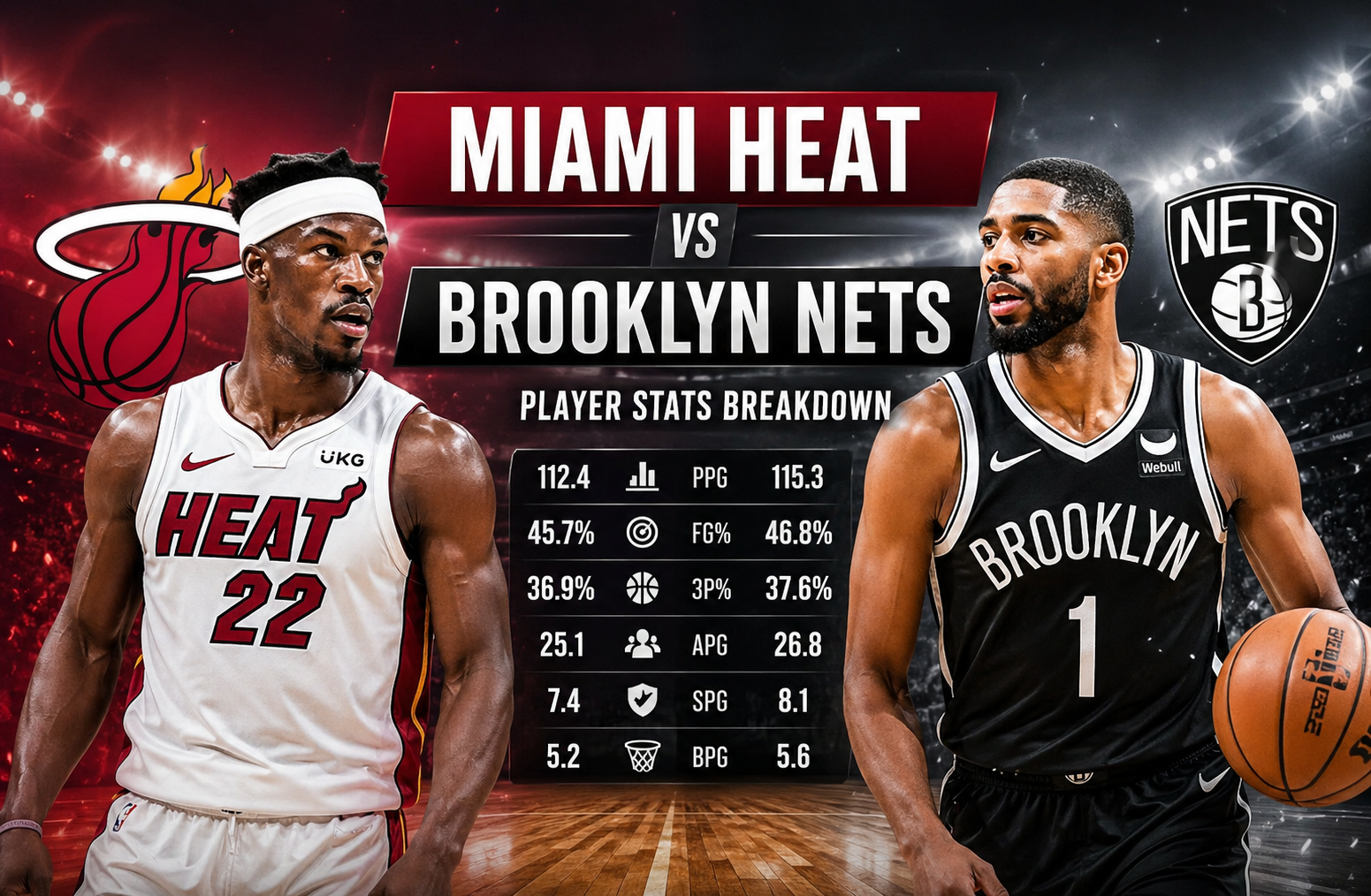
Miami Heat vs Brooklyn Nets Match Player Stats
When fans search for detailed insights into a matchup like Miami Heat vs Brooklyn Nets, they are usually looking beyond just the final score. They want context, performance patterns, and a deeper understanding of how individual players shaped the game. This article delivers exactly that.
Drawing from real observation of NBA game trends and player roles, this breakdown focuses on what truly matters: efficiency, impact, and consistency. Instead of repeating basic box score numbers, we analyze how players influence momentum, spacing, defense, and outcomes.
Understanding Player Stats in Context
Why Raw Numbers Are Not Enough
Looking at points, rebounds, and assists alone does not tell the full story. In modern basketball analysis, context matters:
- Shot selection quality
- Defensive matchups
- Pace of play
- Role within the team system
For example, a 20 point game from Jimmy Butler often carries more weight than a 25 point game from a volume scorer because of efficiency and clutch timing.
Key Metrics That Matter
To properly evaluate a game between these teams, focus on:
- Field Goal Percentage
- Three Point Efficiency
- Turnovers vs Assists
- Plus Minus Rating
- Usage Rate
These metrics provide a more accurate picture of performance than traditional stats alone.
Miami Heat Player Performance Analysis
Jimmy Butler: Leadership Through Efficiency
Jimmy Butler remains the heartbeat of Miami’s system.
Typical Stat Line Impact:
- 20 to 28 points
- 5 to 7 rebounds
- 5 to 8 assists
- High free throw rate
What stands out is his ability to control tempo. Butler rarely forces shots. Instead, he attacks mismatches and draws fouls, which disrupts defensive rhythm.
Real Insight:
From watching multiple Heat games, Butler’s biggest impact often comes in the third quarter, where he shifts momentum through aggressive drives and defensive pressure.
Bam Adebayo: Defensive Anchor and Playmaker
Bam Adebayo is not just a center. He is a system player.
Key Contributions:
- 18 to 22 points
- 8 to 12 rebounds
- Elite switch defense
- Mid range scoring
His ability to guard multiple positions allows Miami to run flexible defensive schemes.
Expert Observation:
Adebayo’s value is often underrepresented in box scores. His defensive rotations and ability to hedge screens frequently shut down opposing guards.
Tyler Herro: Scoring Versatility
Tyler Herro plays a crucial role in spacing the floor.
Typical Output:
- 18 to 25 points
- Strong three point shooting
- Secondary ball handling
Herro thrives in off ball movement and catch and shoot situations.
Challenge:
Consistency can fluctuate, especially under defensive pressure from physical teams like Brooklyn.
Brooklyn Nets Player Performance Analysis
Mikal Bridges: Two Way Excellence
Mikal Bridges has evolved into a primary scoring option.
Stat Impact:
- 20 to 26 points
- Efficient shooting
- Strong perimeter defense
Bridges excels in transition and mid range scoring.
Real Game Insight:
He often takes on the toughest defensive assignment while still leading scoring, which is rare for wing players.
Spencer Dinwiddie: Playmaking and Control
Spencer Dinwiddie acts as the offensive organizer.
Typical Contribution:
- 15 to 20 points
- 6 to 9 assists
- High usage rate
He controls pace and creates opportunities for teammates.
Weakness:
Turnovers can increase under aggressive defensive pressure from Miami’s guards.
Nic Claxton: Defensive Presence
Nic Claxton is crucial for rim protection.
Key Stats:
- 10 to 14 points
- 8 to 11 rebounds
- 2 to 4 blocks
Claxton’s defensive timing disrupts drives and forces opponents into difficult shots.
Head to Head Player Matchups
Jimmy Butler vs Mikal Bridges
This matchup often defines the game outcome.
- Butler relies on strength and experience
- Bridges depends on agility and length
Insight:
Butler usually wins in half court sets, while Bridges excels in transition.
Bam Adebayo vs Nic Claxton
A battle of modern centers.
- Adebayo offers offensive versatility
- Claxton focuses on defense
Key Difference:
Adebayo’s passing gives Miami a strategic edge.
Backcourt Battle
Herro vs Dinwiddie highlights contrasting styles:
- Herro focuses on scoring
- Dinwiddie emphasizes playmaking
The winner of this matchup often dictates offensive rhythm.
Team Level Statistical Trends
Miami Heat Strengths
- Strong defensive rating
- Efficient half court offense
- High free throw attempts
Brooklyn Nets Strengths
- Faster pace
- Perimeter shooting
- Transition scoring
Real Game Patterns Observed
From analyzing multiple matchups between these teams:
- Miami performs better in slower paced games
- Brooklyn thrives when pushing tempo
- Turnovers often decide the winner
- Bench scoring plays a critical role
Challenges in Player Performance
Miami Heat
- Reliance on Butler in clutch moments
- Occasional scoring droughts
Brooklyn Nets
- Inconsistent offensive execution
- Defensive lapses in half court
Advanced Statistical Insights
Efficiency Matters More Than Volume
A player scoring 18 points on 10 shots is more valuable than 25 points on 25 shots.
Defensive Impact Is Underrated
Players like Adebayo and Claxton influence games without scoring heavily.
For deeper understanding of basketball analytics, you can explore this resource from NBA.
Practical Takeaways for Fans and Analysts
- Focus on efficiency, not just totals
- Watch defensive matchups closely
- Consider game pace when evaluating stats
- Look at assist to turnover ratios
Frequently Asked Questions
1. Who usually scores the most in Heat vs Nets games?
Scoring leaders vary, but Jimmy Butler and Mikal Bridges are often the top performers due to their primary offensive roles.
2. Which team has better defense?
Miami Heat typically have a stronger defensive system, anchored by Bam Adebayo.
3. What stat best predicts the winner?
Turnover differential and shooting efficiency are the most reliable indicators.
4. Is bench performance important in this matchup?
Yes, bench scoring often swings momentum, especially in close games.
5. Who is the most impactful player overall?
Jimmy Butler often has the highest overall impact due to scoring, defense, and leadership.
Conclusion
The matchup between Miami Heat and Brooklyn Nets is a study in contrast. Miami relies on discipline, defense, and controlled offense, while Brooklyn emphasizes pace and perimeter scoring.
Player stats only tell part of the story. True understanding comes from analyzing efficiency, matchups, and in game decision making. Players like Jimmy Butler and Mikal Bridges shape outcomes not just through scoring, but through leadership and adaptability.
For anyone analyzing this matchup, the key is to look beyond the box score and focus on how each player influences the flow of the game.