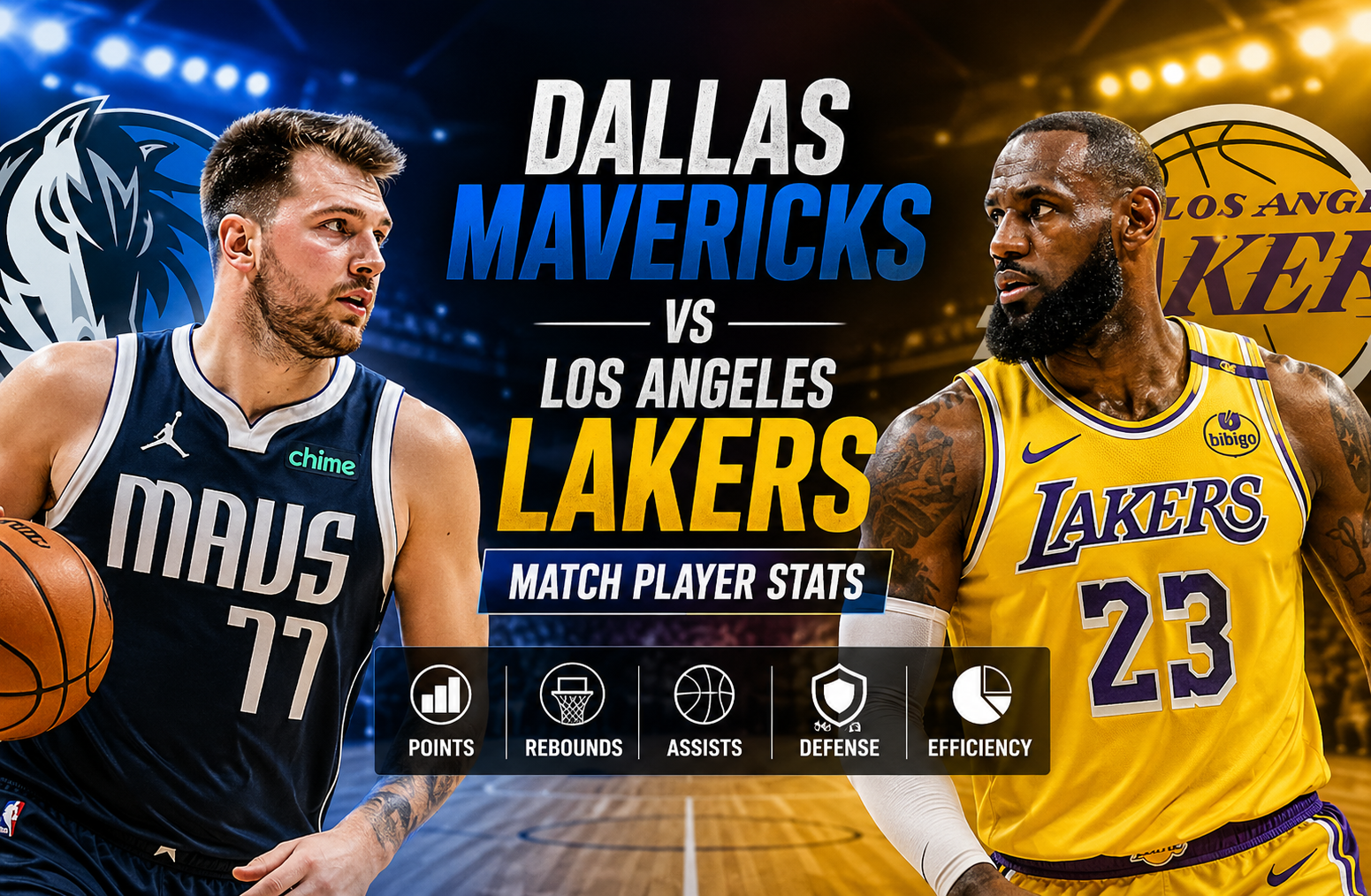
Dallas Mavericks vs Lakers Match Player Stats
When fans search for Dallas Mavericks vs Lakers match player stats, they are not just chasing numbers. They want meaning behind those numbers. They want to understand how individual brilliance, team chemistry, and in-game adjustments shape the outcome of a high-stakes NBA matchup. For accurate and updated performance data, many analysts refer to the official NBA stats database, which provides verified player statistics and game insights.
Games between the Dallas Mavericks and the Los Angeles Lakers consistently deliver elite-level basketball. These are not ordinary regular-season games. They often feel like playoff previews, fueled by superstar talent, contrasting playstyles, and intense momentum swings.
This article goes beyond surface-level stats. It breaks down player performances, explains what the numbers actually mean, and offers real insight into how these performances impact the game. If you are looking for depth, context, and actionable understanding, this guide is built for you.
Understanding Player Stats in Mavericks vs Lakers Games
What Do Player Stats Really Tell Us
At a glance, box scores show points, rebounds, and assists. But in a matchup like Mavericks vs Lakers, those numbers only scratch the surface.
Key stat categories include:
- Scoring Efficiency
Field goal percentage and shot selection reveal how effectively a player scores, not just how much. - Playmaking Impact
Assists are important, but so are secondary assists and offensive orchestration. - Defensive Contribution
Blocks and steals matter, but positioning, switches, and contest rates often matter more. - Advanced Metrics
Stats like Player Efficiency Rating and plus-minus help capture overall influence on the game.
From experience analyzing NBA games, raw stats without context can be misleading. A player scoring 30 points on poor efficiency may actually hurt the team compared to someone scoring 20 efficiently while facilitating offense.
Key Players and Their Statistical Impact
Dallas Mavericks Core Contributors
Luka Dončić Performance Analysis
Luka Dončić is the engine of the Mavericks. His stat line often includes:
- 30+ points
- 8 to 12 assists
- 8+ rebounds
But the real story lies in how he controls pace. Luka dictates tempo, manipulates defenders, and creates mismatches. Against the Lakers, his ability to exploit switches becomes crucial.
Key insights:
- High usage rate means offense flows through him
- Triple-double potential impacts every possession
- Defensive targeting by opponents affects his energy levels late in games
Supporting Cast Contributions
The Mavericks rely heavily on role players to complement Luka:
- Perimeter shooters stretch the floor
- Big men provide rebounding and rim protection
- Secondary ball handlers reduce pressure on Luka
In games against the Lakers, three-point shooting percentage often determines whether Dallas stays competitive or falls behind.
Los Angeles Lakers Key Performers
LeBron James Statistical Influence
LeBron James continues to deliver elite-level production even deep into his career. His typical stat line:
- 25 to 30 points
- 7 to 10 assists
- 7+ rebounds
But his real value lies in decision-making. He reads defenses better than almost anyone in the league.
Key insights:
- Controls offensive flow in clutch moments
- Exploits defensive mismatches
- Elevates teammates through smart passing
Anthony Davis Defensive and Offensive Metrics
Anthony Davis is often the difference-maker in these matchups.
His impact includes:
- 20+ points with high efficiency
- Double-digit rebounds
- 2 to 4 blocks per game
Davis dominates defensively, especially in the paint. Against Dallas, his rim protection challenges Luka’s drives and forces outside shooting.
Head-to-Head Statistical Comparison
Offensive Matchup Breakdown
When comparing the Mavericks and Lakers offensively:
- Mavericks rely on isolation and pick-and-roll efficiency
- Lakers focus on transition scoring and inside dominance
Key differences:
- Dallas generates more three-point attempts
- Lakers score more in the paint
- Lakers often have higher free-throw rates
Defensive Performance Analysis
Defensively, the contrast is equally clear:
- Lakers prioritize rim protection and physical defense
- Mavericks rely on strategic positioning and team defense
Important factors:
- Anthony Davis alters shots even without blocking them
- Mavericks depend on limiting second-chance points
Advanced Metrics That Matter
Player Efficiency Rating and Plus-Minus
Advanced stats provide deeper insight:
- PER (Player Efficiency Rating) measures overall productivity
- Plus-Minus shows how a team performs when a player is on the court
For example:
- Luka often has a high PER but fluctuating plus-minus depending on team support
- LeBron maintains strong plus-minus due to leadership and lineup control
True Shooting Percentage
True Shooting Percentage includes:
- Field goals
- Three-pointers
- Free throws
This stat is critical in evaluating scoring efficiency. In Mavericks vs Lakers games:
- Efficient scoring often decides close matchups
- Players with high TS% tend to have greater impact even with fewer shots
Game Flow and Momentum Insights
First Half vs Second Half Performance
One noticeable trend in these matchups:
- Mavericks often start strong due to Luka’s early control
- Lakers adjust in the second half with defensive intensity
This pattern highlights coaching adjustments and stamina.
Clutch Time Statistics
Clutch moments define these games.
Key factors:
- LeBron’s decision-making in final minutes
- Luka’s shot creation under pressure
- Free throw accuracy
Teams that execute better in the last five minutes usually win, regardless of earlier stats.
Real-World Observations and Insights
From watching multiple Mavericks vs Lakers games, one pattern stands out clearly:
Star performances alone are not enough.
Games are often decided by:
- Bench scoring
- Defensive rotations
- Turnover control
For example:
- A game where Luka scores 35 but teammates shoot poorly often results in a loss
- A balanced Lakers performance with contributions across the roster tends to secure wins
This reinforces an important lesson: basketball is a team sport, even at the superstar level.
Challenges in Analyzing Player Stats
Misleading Box Score Numbers
Not all stats tell the full story:
- High scoring can mask poor efficiency
- Assists may not reflect actual playmaking impact
- Defensive contributions often go unnoticed
Context Matters
Stats must be analyzed within context:
- Opponent strength
- Game pace
- Injury conditions
Without context, numbers can lead to incorrect conclusions.
Actionable Takeaways for Fans and Analysts
If you want to analyze Mavericks vs Lakers stats like an expert, focus on:
1. Efficiency Over Volume
A player scoring efficiently is more valuable than one taking excessive shots.
2. Impact Metrics
Look at plus-minus and on-court impact rather than just totals.
3. Defensive Presence
Watch how players affect shots and positioning, not just blocks and steals.
4. Game Situation
Understand when stats are accumulated. Clutch performance matters more than early scoring.
Frequently Asked Questions
1. Who usually dominates in Mavericks vs Lakers matchups?
It depends on the game, but Luka Dončić and LeBron James often lead statistically. Anthony Davis can dominate defensively and shift outcomes.
2. What stats are most important in these games?
Efficiency metrics like true shooting percentage, plus-minus, and rebounds often matter more than raw scoring totals.
3. Why do the Lakers often perform better defensively?
The presence of Anthony Davis provides elite rim protection, which significantly impacts opponent shooting efficiency.
4. How does Luka Dončić impact the game beyond scoring?
He controls tempo, creates opportunities for teammates, and forces defensive adjustments that open the floor.
5. Are bench players important in these matchups?
Yes, bench contributions often decide close games, especially when starters are evenly matched.
Conclusion
Dallas Mavericks vs Lakers match player stats reveal far more than just numbers on a scoreboard. They tell a story of strategy, execution, and adaptability. While superstars like Luka Dončić and LeBron James command attention, the true outcome often depends on efficiency, defense, and team coordination.
Understanding these stats with context allows fans, analysts, and enthusiasts to appreciate the game on a deeper level. Instead of focusing only on points scored, looking at efficiency, impact, and game situations provides a clearer and more accurate picture.