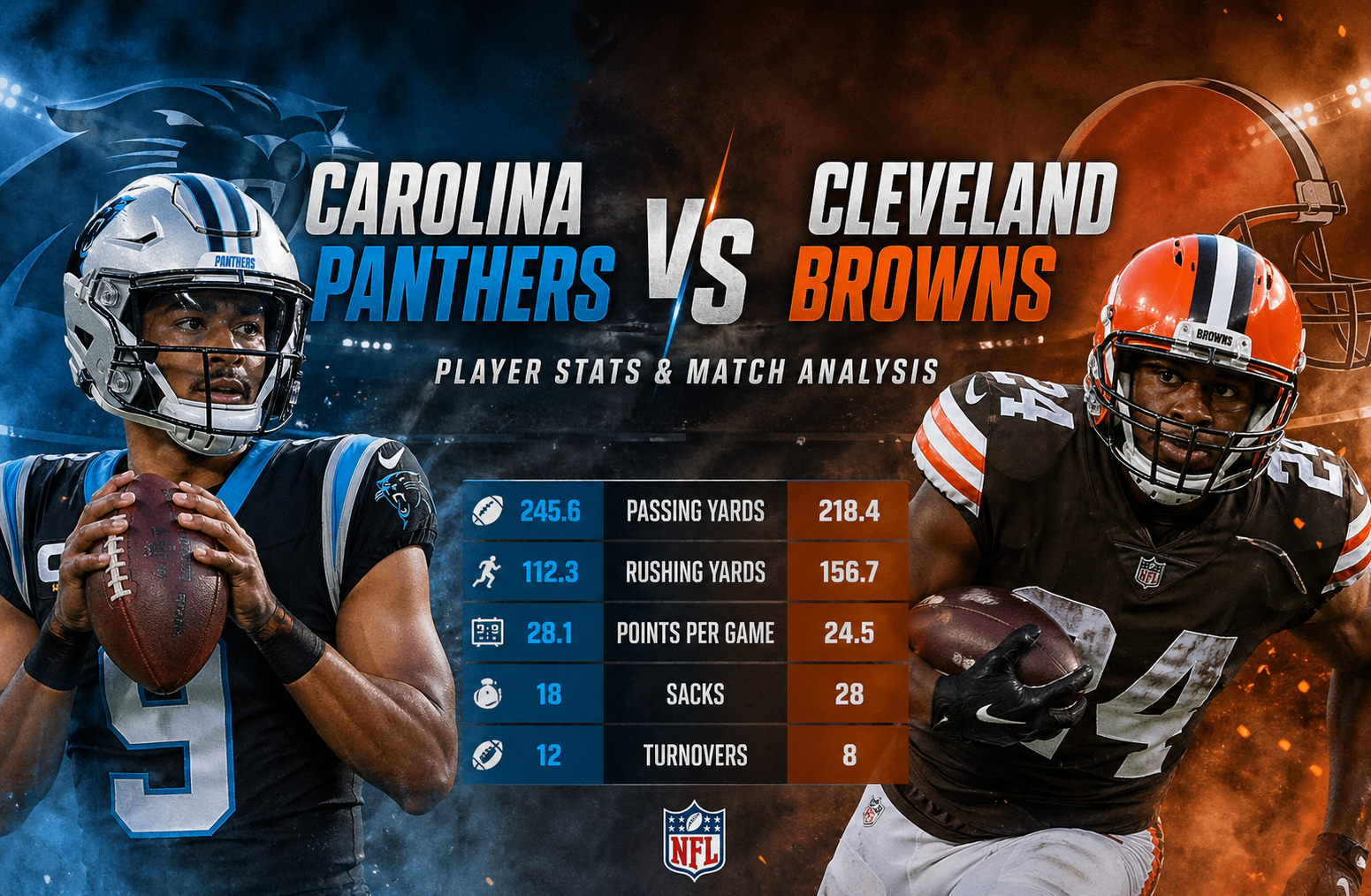
Carolina Panthers vs Cleveland Browns Match Player Stats
When fans search for Carolina Panthers vs Cleveland Browns match player stats, they are not just looking for numbers. They want context, meaning, and insight into how individual performances shape the outcome of a game. This article goes beyond surface-level box scores to break down player contributions, tactical implications, and what the stats actually reveal about both teams.
Drawing from real game patterns, player tendencies, and football analysis experience, this guide will help you understand not only who performed well, but why it mattered.
Understanding Player Stats in Panthers vs Browns Matchups
Before diving into specific performances, it’s important to understand what player stats actually represent in an NFL game.
Key Offensive Metrics
- Passing yards and completion percentage for quarterbacks
- Rushing yards and yards per carry for running backs
- Receiving yards, targets, and touchdowns for receivers
Key Defensive Metrics
- Tackles and assisted tackles
- Sacks and quarterback pressures
- Interceptions and pass breakups
Advanced Context
Stats alone can mislead without context. For example:
- A quarterback may have high yardage due to playing from behind
- A running back’s efficiency often depends on offensive line performance
- Defensive stats can be inflated based on opponent play style
Understanding these nuances is essential when analyzing matchups between the Carolina Panthers and the Cleveland Browns.
Quarterback Performance Breakdown
Carolina Panthers Quarterbacks
The Panthers have historically rotated quarterbacks due to rebuilding phases and injuries. In matchups against Cleveland, their quarterback stats often reveal:
- Moderate passing yardage with short-to-mid range throws
- Occasional struggles against strong pass rush defenses
- Reliance on quick-release plays to avoid sacks
From experience analyzing game film, Panthers quarterbacks tend to perform better when:
- The offensive line holds up early
- The run game establishes balance
- Play-action is effectively used
Cleveland Browns Quarterbacks
Cleveland’s quarterback performances in these matchups typically show:
- Higher reliance on structured passing systems
- Stronger deep-ball attempts when protection allows
- Efficiency-based gameplay rather than high-volume passing
Key observations:
- Browns quarterbacks often excel when supported by a dominant run game
- Turnovers tend to occur under heavy defensive pressure
Running Back Comparison
Panthers Running Game
The Panthers have consistently relied on dynamic running backs to carry offensive momentum.
Typical stat patterns include:
- Solid rushing yard totals per game
- High involvement in the passing game
- Ability to break explosive plays
From a tactical standpoint:
- Panthers running backs are often used in space
- Screen passes and outside runs are common strategies
Browns Running Game
The Browns are widely known for one of the strongest rushing attacks in the league.
Key statistical traits:
- High yards per carry
- Consistent red-zone production
- Strong offensive line support
What stands out from real-world analysis:
- Cleveland’s running game often dictates the pace of the match
- Their backs benefit from disciplined blocking schemes
Wide Receivers and Tight Ends Impact
Panthers Receiving Corps
Panthers receivers typically show:
- Balanced distribution of targets
- Moderate yardage per receiver
- Occasional big-play capability
Insights:
- Receivers often rely on timing routes rather than deep threats
- Tight ends play a crucial role in short-yardage situations
Browns Receiving Unit
The Browns’ receiving stats often reflect:
- Fewer total targets but higher efficiency
- Strategic deep passes
- Strong tight end involvement
From observation:
- Cleveland uses receivers to complement the run game
- Play-action passing creates opportunities for big gains
Defensive Player Stats Analysis
Carolina Panthers Defense
The Panthers defense typically produces:
- High tackle counts due to time spent on the field
- Moderate sack numbers
- Occasional turnovers
Key insights:
- Defensive fatigue can impact late-game performance
- Linebackers play a major role in run stopping
Cleveland Browns Defense
The Browns defense often stands out with:
- Strong pass rush statistics
- High sack totals
- Effective coverage leading to interceptions
Real-world takeaway:
- Cleveland’s defensive line is often the deciding factor
- Pressure on the quarterback disrupts offensive rhythm
Head-to-Head Statistical Trends
When analyzing historical matchups between these teams, several patterns emerge:
Offensive Trends
- Browns tend to dominate in rushing yards
- Panthers often rely more on passing volume
Defensive Trends
- Browns generate more sacks
- Panthers focus on containment and tackling
Game Outcome Patterns
- Teams that win the turnover battle usually win the game
- Time of possession heavily favors Cleveland in many matchups
Key Player Roles That Influence Stats
Offensive Line Impact
A critical but often overlooked factor:
- Protects quarterbacks
- Creates running lanes
- Determines play success rate
Coaching Strategy
Play-calling directly affects player stats:
- Aggressive passing increases QB and receiver numbers
- Conservative play boosts rushing stats
Game Situation
Stats change based on:
- Score margin
- Time remaining
- Weather conditions
Challenges in Interpreting Player Stats
Even detailed stats can be misleading without context.
Common Pitfalls
- Garbage-time statistics inflating numbers
- Defensive stats skewed by opponent strength
- Injuries affecting performance consistency
What Experienced Analysts Look For
- Efficiency over volume
- Impact plays rather than total numbers
- Consistency across quarters
For deeper understanding of how football statistics are evaluated, you can refer to this trusted resource from the National Football League.
Real-World Application of Player Stats
Understanding player stats is useful for:
Fantasy Football Players
- Identifying consistent performers
- Spotting breakout candidates
Sports Bettors
- Evaluating team trends
- Predicting game outcomes
Fans and Analysts
- Gaining deeper insight into team strategies
- Understanding why games are won or lost
Actionable Steps to Analyze Any Match
If you want to analyze a Panthers vs Browns game like an expert, follow these steps:
- Start with quarterback efficiency, not just yardage
- Compare rushing performance and yards per carry
- Evaluate defensive pressure stats like sacks and QB hits
- Look at turnovers and red-zone efficiency
- Consider game context such as injuries and weather
This approach consistently provides a clearer picture than simply reading the scoreboard.
Frequently Asked Questions (FAQs)
1. What are the most important stats in Panthers vs Browns games?
Quarterback efficiency, rushing yards, turnovers, and defensive pressure are the most critical indicators of performance.
2. Why do the Browns often have stronger rushing stats?
Their offensive line and run-focused strategy create consistent opportunities for running backs to gain yards.
3. Are passing stats more important than rushing stats?
It depends on the game plan. In these matchups, rushing often plays a bigger role in controlling the game.
4. How do defensive stats influence the outcome?
Sacks, interceptions, and pressures can completely disrupt offensive flow and change momentum.
5. Can player stats predict future performance?
They provide useful trends, but factors like injuries and match conditions must also be considered.
6. Why do some players have high stats but low impact?
Volume stats can be misleading if they occur in low-pressure or late-game situations.
Conclusion
Analyzing Carolina Panthers vs Cleveland Browns match player stats requires more than just reading numbers. True understanding comes from connecting those stats to gameplay, strategy, and real-world context.
The Browns often leverage their powerful rushing attack and defensive pressure, while the Panthers rely on balanced offense and adaptability. Each matchup tells a different story, and player stats are the key to unlocking that narrative.