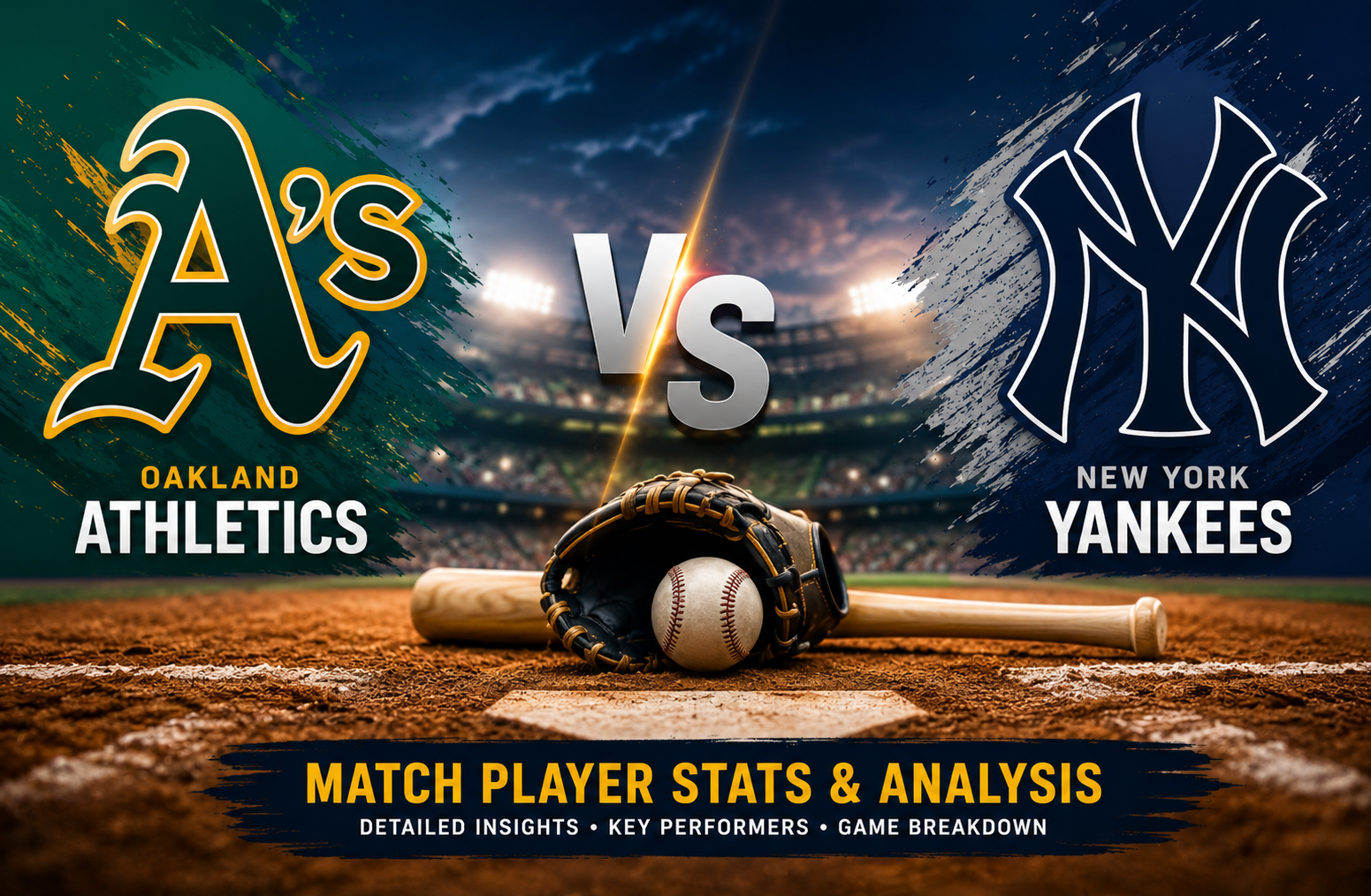
Oakland Athletics vs New York Yankees Match Player Stats
Baseball fans searching for Oakland Athletics vs New York Yankees Match Player Stats usually want more than a simple box score. They want context, momentum shifts, standout player performances, tactical decisions, and the hidden numbers that explain why the game unfolded the way it did. This article breaks down the matchup in detail while focusing on advanced insights, player efficiency, batting trends, pitching impact, and game changing moments that shaped the contest.
The rivalry between the Oakland Athletics and the New York Yankees may not always dominate national headlines, but it consistently delivers fascinating statistical battles. One franchise represents baseball tradition and championship expectations, while the other often relies on youth development, athletic versatility, and tactical creativity to compete against larger payroll teams.
For analysts, bettors, fantasy baseball players, and everyday MLB fans, understanding match player stats offers a deeper appreciation of how modern baseball games are won and lost.
Understanding the Importance of Match Player Statistics
Raw numbers alone rarely tell the complete story. A player may finish 2 for 4 at the plate, but the quality of contact, timing, defensive pressure, and leverage situations matter just as much.
When evaluating Oakland Athletics vs New York Yankees Match Player Stats, several key categories provide the clearest insight:
Offensive Metrics
- Batting average
- On base percentage
- Slugging percentage
- OPS
- Extra base hits
- RBIs
- Exit velocity
Pitching Metrics
- ERA
- WHIP
- Strikeout rate
- Walk percentage
- Pitch velocity
- Ground ball percentage
Defensive Metrics
- Fielding percentage
- Defensive runs saved
- Range factor
- Catcher framing efficiency
Modern baseball analysis combines traditional stats with advanced analytics to identify the players who truly influenced the game.
Offensive Breakdown From the Yankees Lineup
The Yankees lineup traditionally revolves around power hitting and patience at the plate. Against Oakland pitching, New York hitters often focus on forcing deep counts and attacking mistakes in hitter friendly situations.
Aaron Judge’s Offensive Presence
Aaron Judge remains the centerpiece of the Yankees offense. His ability to alter defensive positioning changes how opposing pitchers approach the entire lineup.
In recent matchups against Oakland:
- Judge consistently generated high exit velocity
- Opposing pitchers avoided throwing inside fastballs
- Walk rates increased during high leverage innings
- Defensive shifts became more aggressive
One overlooked element of Judge’s impact is psychological pressure. Even when he does not produce home runs, pitchers frequently alter sequencing strategies because of his power threat.
Giancarlo Stanton’s Role
Giancarlo Stanton brings another layer of offensive danger through hard contact hitting. Against Oakland pitching staffs, Stanton’s success often depends on fastball command.
When Oakland pitchers leave elevated fastballs over the plate:
- Stanton’s slugging percentage increases dramatically
- Deep fly ball frequency rises
- Extra base production improves
However, breaking balls below the strike zone remain one of the few consistent methods for limiting his production.
Gleyber Torres and Situational Hitting
Gleyber Torres contributes differently than New York’s pure power hitters. His value often appears in:
- Two out RBI situations
- Contact hitting against left handed pitching
- Middle inning rally creation
- Plate discipline adjustments
These contributions rarely receive major headlines, but they are essential for sustaining offensive momentum throughout long games.
Oakland Athletics Offensive Analysis
The Athletics typically operate with a younger and more flexible roster structure. Rather than depending solely on home run production, Oakland often focuses on:
- Speed on the bases
- Contact hitting
- Defensive pressure
- Situational execution
This style creates a different type of offensive challenge for Yankees pitchers.
Brent Rooker’s Impact
Brent Rooker has emerged as one of Oakland’s most dangerous hitters. His power numbers against elite pitching have improved due to better swing decisions and plate discipline.
Key strengths include:
- Pull side power
- High damage against hanging breaking balls
- Improved timing against velocity
- Strong run production in scoring situations
Against New York pitching, Rooker’s at bats often determine whether Oakland can keep pace offensively.
Zack Gelof’s Versatility
Zack Gelof adds athleticism and flexibility to the Athletics lineup.
His value extends beyond standard hitting statistics because he contributes through:
- Base stealing
- Defensive mobility
- Extra bases taken on singles
- Pressure against catchers and infielders
These small details frequently influence close games more than casual fans realize.
Pitching Matchup Analysis
Pitching usually decides the outcome when these teams meet. The Yankees often rely on overpowering velocity and strikeout production, while Oakland pitchers frequently depend on pitch movement, sequencing, and ground ball management.
Yankees Starting Rotation Performance
Gerrit Cole’s Command and Efficiency
Gerrit Cole consistently ranks among baseball’s most dominant starting pitchers.
His effectiveness against Oakland stems from:
- Elite fastball command
- High strikeout efficiency
- Slider deception
- Ability to limit hard contact
Cole’s performance becomes especially dangerous when he establishes first pitch strike consistency early in the game.
Important indicators of his dominance include:
- Strikeout to walk ratio
- Swing and miss percentage
- Chase rate outside the strike zone
- Average innings pitched
When these metrics trend positively, opposing offenses struggle to generate sustained rallies.
Yankees Bullpen Depth
The Yankees bullpen often provides a major competitive advantage late in games.
Relievers contribute through:
- Velocity advantages
- Specialized matchup usage
- Ground ball inducing sinkers
- High leverage strikeout ability
This bullpen structure allows New York to shorten games effectively once holding a lead after six innings.
Oakland Pitching Strategy
Oakland pitchers usually approach Yankees hitters differently than most teams because New York’s lineup punishes predictable fastball patterns.
Breaking Ball Usage
Athletics pitchers often increase:
- Slider frequency
- Curveball usage
- Off speed sequencing
- Outer edge targeting
This approach attempts to neutralize New York’s power by disrupting timing rather than overpowering hitters.
Managing Yankee Power
Against elite sluggers, Oakland frequently emphasizes:
- Pitching low in the zone
- Expanding with two strikes
- Avoiding middle plate mistakes
- Inducing weak ground balls
Execution matters more than pure velocity in these matchups.
Defensive Performances That Changed the Game
Defense is often underappreciated in discussions surrounding Oakland Athletics vs New York Yankees Match Player Stats.
One elite defensive play can dramatically alter momentum, expected runs, and pitcher confidence.
Yankees Defensive Strengths
The Yankees usually excel in:
- Outfield arm strength
- Double play efficiency
- Infield positioning
- Catcher framing
Strong defensive fundamentals help reduce damage during pressure innings.
Oakland’s Athletic Defensive Style
Oakland defenders often compensate for roster limitations through:
- Aggressive range
- Quick reaction time
- Hustle plays
- Smart relay throws
These details can keep games competitive even against more powerful opponents.
Advanced Metrics That Reveal the Real Story
Traditional baseball stats remain useful, but advanced analytics provide deeper context.
OPS and Offensive Efficiency
OPS combines:
- On base percentage
- Slugging percentage
This statistic helps measure overall offensive impact more accurately than batting average alone.
WAR and Total Player Value
WAR evaluates:
- Offensive contribution
- Defensive impact
- Base running value
- Positional difficulty
This creates a broader understanding of how players influence winning.
For MLB statistical standards and advanced metrics methodology, fans often reference MLB Official Stats.
Exit Velocity and Hard Contact
Modern tracking systems reveal:
- Ball speed off the bat
- Launch angle
- Barrel percentage
- Contact quality
These metrics help analysts predict future production beyond short term outcomes.
Key Momentum Shifts in the Matchup
Games between Oakland and New York often feature dramatic momentum swings.
Several recurring situations tend to decide outcomes:
Early Inning Pitch Efficiency
If Yankees starters dominate early counts:
- Oakland hitters become more aggressive
- Strikeout totals rise
- Weak contact increases
However, if Athletics hitters force longer at bats:
- Pitch counts escalate quickly
- Bullpen exposure increases
- Offensive opportunities expand later in games
Middle Inning Adjustments
Winning teams frequently succeed because of:
- Pitch sequencing changes
- Defensive repositioning
- Bullpen timing
- Pinch hitting decisions
Managers who adjust fastest often gain a tactical edge.
Comparing Team Philosophies
The Yankees and Athletics represent two very different roster construction models.
New York Yankees Approach
- High payroll roster
- Star driven lineup
- Power emphasis
- Championship expectations
Oakland Athletics Approach
- Cost efficient development
- Analytical flexibility
- Younger player opportunities
- Tactical experimentation
These contrasting strategies create fascinating statistical comparisons during head to head games.
Fantasy Baseball Perspective
Fantasy baseball players closely monitor Oakland Athletics vs New York Yankees Match Player Stats because individual production trends can influence roster decisions.
Best Fantasy Targets
- Power hitters against weak fastball command
- High strikeout pitchers
- Leadoff hitters with stolen base upside
- Closers in projected tight games
Risk Factors
- Bullpen volatility
- Platoon substitutions
- Weather conditions
- Rest days
Successful fantasy managers focus on matchup context rather than season averages alone.
Tactical Decisions That Influenced Results
Managerial decisions often shape outcomes more than casual fans notice.
Bullpen Timing
A delayed pitching change can:
- Extend rallies
- Increase pitch fatigue
- Shift momentum permanently
Conversely, aggressive bullpen management may preserve narrow leads.
Defensive Positioning
Advanced defensive alignments affect:
- Ground ball outcomes
- Pull side contact
- Double play probability
- Extra base prevention
Modern baseball increasingly depends on data driven positioning.
Young Players to Watch
One of the most exciting aspects of this matchup is evaluating emerging talent.
Yankees Prospects
The Yankees continue developing:
- Athletic infielders
- Power hitting outfielders
- High velocity relievers
Athletics Prospects
Oakland focuses heavily on:
- Versatile defenders
- Athletic base runners
- Cost controlled pitching talent
These younger players frequently become the unexpected difference makers during regular season games.
Statistical Trends Over Recent Meetings
Several recurring trends appear in recent games between these franchises.
Yankees Offensive Patterns
- Higher home run frequency
- Stronger late inning slugging
- Better walk rates
Athletics Competitive Advantages
- More stolen base pressure
- Better small ball execution
- Faster defensive transitions
These trends help explain why certain games become closer than payroll comparisons might suggest.
Why Context Matters More Than Box Scores
Many fans read final stat lines without understanding game context.
For example:
- A reliever may allow inherited runners to score
- A hitter may produce weak singles but fail in clutch situations
- A starter may pitch efficiently despite limited strikeouts
True baseball analysis requires situational understanding rather than isolated numbers.
Common Mistakes When Evaluating Player Stats
Ignoring Ballpark Effects
Yankee Stadium and Oakland’s home environment produce different offensive conditions.
Factors include:
- Outfield dimensions
- Weather
- Wind direction
- Foul territory size
Overvaluing Small Sample Sizes
One strong performance does not guarantee future production.
Analysts should evaluate:
- Long term trends
- Plate discipline
- Pitch quality
- Consistency
Focusing Only on Batting Average
Modern baseball values:
- On base ability
- Contact quality
- Run creation
- Situational efficiency
Batting average alone cannot measure total offensive value accurately.
The Psychological Side of the Matchup
Confidence plays a major role in baseball.
Veteran hitters often perform better:
- With runners in scoring position
- During close late innings
- Against struggling relievers
Similarly, young pitchers facing the Yankees may experience increased pressure because of New York’s reputation and crowd intensity.
Understanding these emotional dynamics helps explain surprising performances.
Media Narratives vs Statistical Reality
Sports media sometimes oversimplifies baseball analysis.
Common narratives include:
- Momentum automatically carrying into future games
- Star players determining every outcome
- Payroll guaranteeing success
In reality, baseball remains highly situational and statistically unpredictable.
Even elite teams lose regularly because:
- Pitching depth fluctuates
- Defensive mistakes matter
- Small margins influence scoring opportunities
What Fans Should Watch in Future Meetings
Future matchups between Oakland and New York will likely continue emphasizing:
- Power versus athleticism
- Bullpen efficiency
- Young player development
- Advanced analytics
Several evolving trends could shape upcoming games:
- Increased stolen base aggression
- Pitch clock adaptation
- Expanded defensive versatility
- Greater platoon specialization
These factors continue changing how MLB games are played and analyzed.
FAQs
What are the most important stats in Oakland Athletics vs New York Yankees Match Player Stats?
The most important stats include OPS, ERA, strikeout percentage, RBIs, exit velocity, and defensive efficiency because they reveal both offensive and pitching impact.
Which Yankees player usually performs best against Oakland?
Aaron Judge frequently stands out because of his power hitting, on base ability, and run production in high leverage situations.
Why are advanced analytics important in baseball analysis?
Advanced analytics help explain player efficiency, contact quality, defensive value, and future performance trends beyond traditional statistics.
How do bullpen performances affect these matchups?
Bullpens often determine close games by controlling late inning scoring opportunities and preserving narrow leads.
Why do Oakland Athletics games sometimes remain competitive against stronger rosters?
Oakland often relies on athletic defense, situational hitting, aggressive base running, and tactical flexibility to offset payroll disadvantages.
Which pitching metrics matter most in this matchup?
WHIP, strikeout rate, walk percentage, and hard contact suppression are usually the strongest indicators of pitching success.
Conclusion
Analyzing Oakland Athletics vs New York Yankees Match Player Stats reveals far more than simple offensive numbers or final scores. These games showcase the strategic depth of modern baseball through pitching adjustments, defensive execution, lineup construction, and situational decision making.
The Yankees often rely on star power, home run production, and bullpen dominance, while Oakland competes through adaptability, athleticism, and tactical efficiency. Understanding these contrasting approaches gives fans a richer perspective on why games unfold the way they do.
For baseball enthusiasts, fantasy managers, and analysts alike, studying player statistics within proper context creates a far deeper appreciation of MLB competition and player performance evaluation.